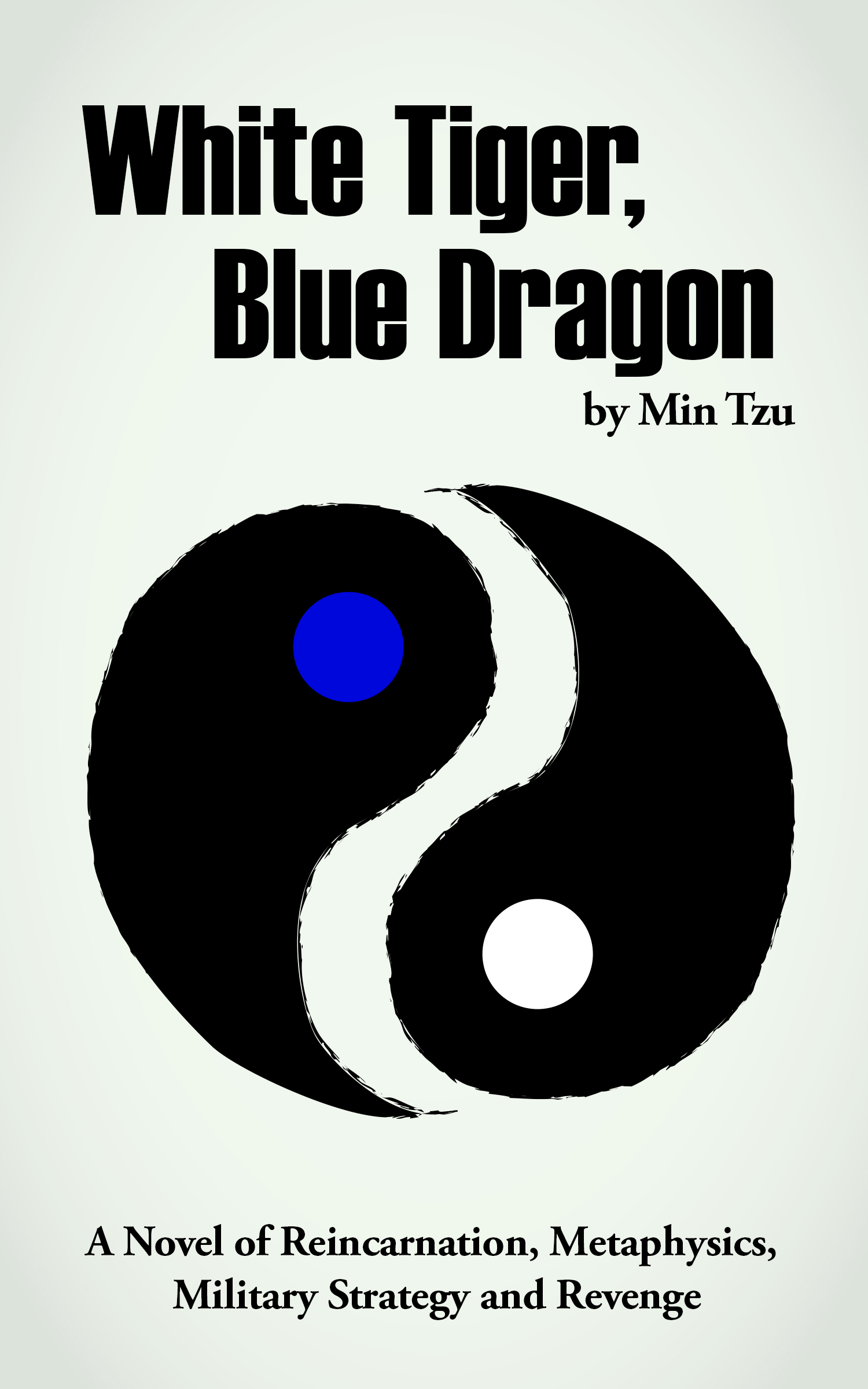


 NOW YOU CAN BUY THIS BOOK FOR THE KINDLE!
CLICK HERE TO GO TO THE KINDLE STORE FOR THIS BOOK
CLIC AQUÍ PARA COMPRAR ESTE LIBRO EN AMAZON MÉXICO
TO DOWNLOAD THE FREE KINDLE FOR PC, CLICK HERE
Book: ebook format
Table of Contents from White Tiger, Blue Dragon
Chapter Nine from White Tiger, Blue Dragon
Chapter Twelve from White Tiger, Blue Dragon
NOW YOU CAN BUY THIS BOOK FOR THE KINDLE!
CLICK HERE TO GO TO THE KINDLE STORE FOR THIS BOOK
CLIC AQUÍ PARA COMPRAR ESTE LIBRO EN AMAZON MÉXICO
TO DOWNLOAD THE FREE KINDLE FOR PC, CLICK HERE
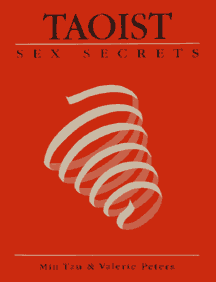
(The illustration on the book cover is an ancient Taoist symbol of a coiled spring. A spring is designed to yield a little then bounce back and so represents the principle of "giving and taking." This action-reaction represents Taoism and Taoism represents sex. The seven-coiled spiral also depicts the energy of earth that spirals like a top, moving first from right to left and then reversing direction.)
The Taoist book the I Ching states "Sexual intercourse is the foundation of life, a manifestation of the forces of Yin and Yang."
When Taoists devised a sexology method, they did not have hidden motives nor did they want to discuss subjects they knew nothing about. They simply wanted to help people who blindly sought the pleasures of the flesh by letting them know that the Tao of life and death, the eternal cycle of procreation and transformation, can easily be upset by unrestrained sexual activity.
The ancients also said. "It is hard to live with women but only weak men give up the struggle with the opposite sex and choose to live alone."
This work contains a comprehensive translation of the Yellow Emperor's book explaining Taoist sexology, plus 22 other chapters of assorted Taoist sex principles. It is the only Taoist method ever translated in full.
It explains, among other things:
Table of Contents from Taoist Sex Secrets
Excerpts from Taoist Sex Secrets
Book, Paperback (8.5 x 11, 184 pages) .................... $89
Order This Book Through PayPal using your credit card, debit card, PayPal account or "Pay Me Later" payment options. You do not need to have a PayPal account to pay with PayPal!
 NOW YOU CAN BUY THIS BOOK FOR THE KINDLE!
CLICK HERE TO BUY THIS BOOK IN THE KINDLE STORE
CLIC AQUÍ PARA COMPRAR ESTE LIBRO EN AMAZON MÉXICO
TO DOWNLOAD THE FREE KINDLE FOR PC, CLICK HERE
In this book you will find out about:
Excerpts from the book Chinese Taoist Sorcery: The Art of Getting Even.
Table of Contents from Chinese Taoist Sorcery
Book, Paperback .................... SOLD OUT!!!
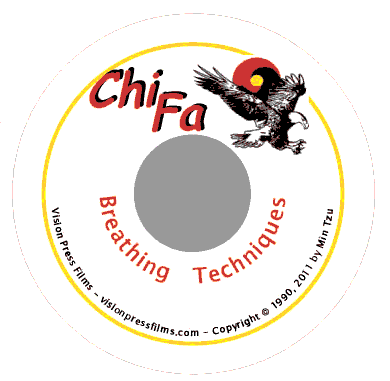 CH FA IS THE FOUNDATION OF THE CHINESE MILITARY METHODS USED TO INCREASE MAN'S INTELLIGENCE.
 The second pillar of Taoist knowledge, Chi Fa is an ancient Chinese method of breathing exercises designed to increase man's Chi energy, the universal life force that animates all living things. This system is so old that no one knows exactly when it was created, but it follows the principles of change found in the I Ching. When using these techniques, the practitioner replaces stale with fresh air, thus revitalizing his internal organs and muscles without having to rely on weights or mechanical apparatus.
Chi Fa increases a person's internal and external strength, reduces stress, sharpens the five senses, and helps the blood flow unobstructed through the blood vessels. This helps to prevent circulatory and digestive problems, and retards the aging process and it is considered to be the true Taoist alchemical method for promoting longevity.
In China, martial arts practitioners use Chi Fa to develop the fabled "Iron Hand" that allows them to strike their opponents with great strength, and the "Iron Shirt" that acts like a coat of armor and protects them from sustaining serious internal injuries during combat. Those who do not know this method and follow the more common training practice of hitting punching bags or breaking bricks only injure their hands so severely that they often have to be amputated.
For those who practice metaphysics (as described in the book Chinese Taoist Sorcery), Chi Fa keeps their level of Chi energy high. This energy acts like a shield that protects them while they are performing rituals and prevents their enemies from hitting them with the negative force of magic spells.
Chi Fa exercises strengthen the sexual organs. They also restore, maintain, or increase a man's sexual energy because, as indicated in the book Taoist Sex Secrets, a person's level of energy decreases significantly after he has intercourse (or when he is sick). But with these breathing techniques, circulation is improved and the body begins to recuperate its vigor within 24 hours.
Eighteen Chi Fa Taoist breathing techniques are included in this DVD.
Click here to view an excerpt of this DVD on YouTube: Chi Fa DVD
DVD (58 minutes).................... $89.00
Order This DVD Through PayPal using your credit card, debit card, PayPal account or "Pay Me Later" payment options. You do not need to have a PayPal account to pay with PayPal!
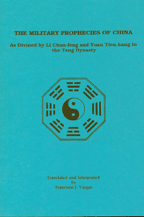 This is the method that Nostradamus followed to write his prophecies.
Each of the 60 prophecies in this book contains its own I Ching hexagram, riddle, and original ancient drawing. Readers will be fascinated by the accuracy of their predictions.
This book of prophecies contains startling information about:
Excerpts from The Military Prophecies of China
Book, Studio Script Binding .................... SOLD OUT!!!
Order This Book Through PayPal using your credit card, debit card, PayPal account or "Pay Me Later" payment options. You do not need to have a PayPal account to pay with PayPal!
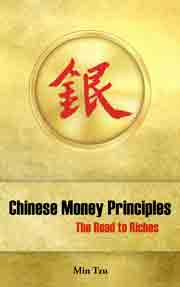 NOW YOU CAN BUY THIS BOOK FOR THE KINDLE!
CLICK HERE TO GO TO THE KINDLE STORE FOR THIS BOOK
TO DOWNLOAD THE FREE KINDLE FOR PC, CLICK HERE
In this book, you will find out about:
You will also learn:
Table of Contents from Chinese Money Principles
Excerpts from Chinese Money Principles
Book, Studio Script Binding .................... $89
Order This Book Through PayPal using your credit card, debit card, PayPal account or "Pay Me Later" payment options. You do not need to have a PayPal account to pay with PayPal!
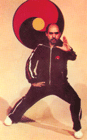
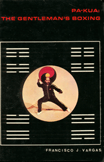 Pa Kua is considered to be the king of internal Chinese martial arts. It is elegant, dignified, and is said to enhance the natural grace of the human body. It also provides the key needed to develop perfect balance both in practice and self-defense.
The practice of "walking the circle" in Pa Kua, strengthens the practitioner's neck, arms, wrists, and ankles, increases flexibility in his waist, and helps the Chi energy to flow freely through his blood vessels.
This book also contains principles of Chinese military strategy, medicine, and metaphysics that are not included in the DVD, and pictures and illustrations that show the Pa Kua exercises in detail.
 Excerpts from the book Pa Kua: The Gentleman's Boxing
Table of Contents from Pa Kua: The Gentleman's Boxing
Paperback ................... NOT AVAILABLE
 Pa Kua is a Chinese system of internal fighting that is also designed to expand the practitioner's mind. Without Pa Kua, Hsing I and Tai Chi are incomplete and vice versa.
Chinese fighting principles state that fighting is composed of 70% leg skill and 30% hand skill. Thus Pa Kua is designed to exercise both the legs and the arms, but excels in teaching the defensive maneuvers of the hands.
By using his open palms, the Pa Kua fighter executes eight primary techniques, each representing one trigram of the I Ching, as he walks in circles around his opponents.
In this DVD, the eight circling techniques and their fighting applications are shown both individually and in the traditional sequence of the Pa Kua form.
Also included are the two-man training exercises in the circle.
Click here to view an excerpt of this DVD on YouTube: Pa Kua DVD
DVD (47 minutes).................... $89.00
Order This DVD Through PayPal using your credit card, debit card, PayPal account or "Pay Me Later" payment options. You do not need to have a PayPal account to pay with PayPal!
 Hsing-I Chuan, or Will-and Form Fist, is to Kung Fu students what the alphabet is to a language. Developed by Yueh Fei, the famous general of the Sung Dynasty, and based on the principle of "force against force," this method focuses on five steps. Each step represents one of the Five Elements. The deceptive simplicity of this method makes it one of the lesser known branches of Kung Fu. But without it, a fighter will never be able to apply Chi energy in combat. This DVD is the up-dated version of Vision Film's 1976 Hsing-I Chuan film and it includes the fighting applications of each technique.
Click here to view an excerpt of this DVD on YouTube: Hsing I DVD
DVD (52 minutes) .................... $89.00
Order This DVD Through PayPal using your credit card, debit card, PayPal account or "Pay Me Later" payment options. You do not need to have a PayPal account to pay with PayPal!
 Tai Chi, or the Supreme Fist method, is the third method of Internal Kung Fu. Devised to strengthen the waist, which is used as an axle in the application of Internal techniques, Tai Chi also activates the circulation of the Chi energy in the practitioner's body. Above all, Tai Chi teaches the student how to turn his body in all eight directions and how to shift his weight during each change. All the movements are done at a slow tempo which allows the practitioner to master each posture correctly and to coordinate the movements of his body with those of his arms and legs. The usage of Tai Chi techniques in combat is shown, as well as several two-man pushing hands exercises.
Click here to view an excerpt of this DVD on YouTube: Tai Chi DVD
DVD (52 minutes)....................$89.00
Order This DVD Through PayPal using your credit card, debit card, PayPal account or "Pay Me Later" payment options. You do not need to have a PayPal account to pay with PayPal!
The nunchaku, double short sticks joined by a piece of cord or chain, is an ancient Chinese weapon. Due to the weapon's shape, the fighter who wields it is confident that one of the sticks will fall on his opponent's body with a force equivalent to hundreds of pounds at the point of impact. Although is it easy to learn how to use the nunchakus, it is difficult to learn how to defend against them. This chart contains the basic defensive techniques needed to stop or neutralize full swinging nunchakus.
Chart .................... NOT AVAILABLE
The ancient art of Chinese archery is said to have been invented by the Yellow Emperor. Its techniques have remained in use throughout the centuries because they benefit both the bodies and minds of their practitioners. The art is still practised today in Kung Fu as part of the system of classical weapons.
The set of two 23" X 29" charts shows preliminary and advanced exercises and shooting techniques. These exercises strengthen the entire body, especially the shoulders and arms.
Set of two charts .................... NOT AVAILABLE
PÁGINA DE PRODUCTOS EN ESPAÑOL